Migration With Dignity
01Kiribati's bet that skills matter more than sympathy
For a country whose land may become uninhabitable within this century, the question of where its people might go is not abstract. But the Government of Kiribati has consistently refused to frame that question as a crisis waiting for charity. Instead, it has built a policy around a different premise: that I-Kiribati who move should move on their own terms, into jobs that are wanted, not into camps or aid queues.
The phrase most associated with this approach is "migration with dignity." It entered formal policy language during the presidency of Anote Tong, who served from 2003 to 2016 and brought Kiribati's situation to sustained international attention. The underlying argument is straightforward: if labour mobility is coming regardless — if economic pressure and environmental change will push people out over the coming decades — then the productive response is to ensure those people arrive elsewhere with recognised qualifications, professional standing, and legal pathways already open to them. Managed, skilled migration, not displacement.
02What the policy actually involves
The practical instrument is investment in education and vocational training, directed specifically toward internationally transferable credentials. Maritime training has been a particular focus. Kiribati sits in the middle of one of the world's busiest tuna-fishing zones, and its men have worked on distant-water vessels for decades; the policy formalises and deepens that by training seafarers to internationally recognised certification standards, making them employable on commercial shipping worldwide rather than just locally chartered boats.
Nursing and healthcare training has followed similar logic. There is persistent demand for trained healthcare workers across the Pacific, in Australia, in New Zealand, and further afield. Kiribati has worked to ensure its nurses meet the certification requirements those receiving countries set, so that movement, when it happens, is through a professional door rather than a humanitarian one.
New Zealand has provided a formal channel through its Pacific Access Category, a balloted residency scheme that allocates a small annual quota specifically to citizens of Kiribati (along with Tuvalu, Tonga, and Fiji). Australia's Pacific Australia Labour Mobility scheme creates seasonal and longer-term work pathways. These are not emergency provisions; they are structured labour arrangements, and the Kiribati policy is explicitly oriented toward filling them with people who are skilled enough to make the most of the opportunity and to negotiate from strength.
The logic extends to land. Kiribati made an internationally notable purchase of land on Vanua Levu in Fiji — roughly 5,000 acres — intended partly for food security but also discussed in terms of a possible future foothold for i-Kiribati people if conditions at home deteriorate severely. The Fijian government subsequently raised complications around the arrangement, and its future status has remained uncertain, but the underlying thinking was consistent with the broader policy: secure options before they are needed, through negotiation and purchase, not through appeal to emergency.
03The limits of the argument
Migration with dignity is a policy position, not a guarantee. It presupposes that receiving countries will continue to value the skills being trained, that certification standards will remain aligned, and that the political will in those countries to accept Pacific migrants stays intact — none of which is automatic. It also does not resolve the situation of those who cannot or will not migrate: the elderly, the land-bound, those whose identity is inseparable from a specific island. For them, the question is not about transferable credentials but about what sea-level rise actually does to the ground beneath a house built on an atoll.
The policy also cannot fully substitute for the harder international conversation about which countries bear responsibility for emissions that are raising the sea. Kiribati's contribution to global warming is negligible. The dignity framing is partly a refusal to let that injustice become a reason to wait passively for rescue.
What it does do — and this matters — is treat I-Kiribati people as agents rather than victims, and build real infrastructure, however incomplete, toward a future they have some hand in shaping.
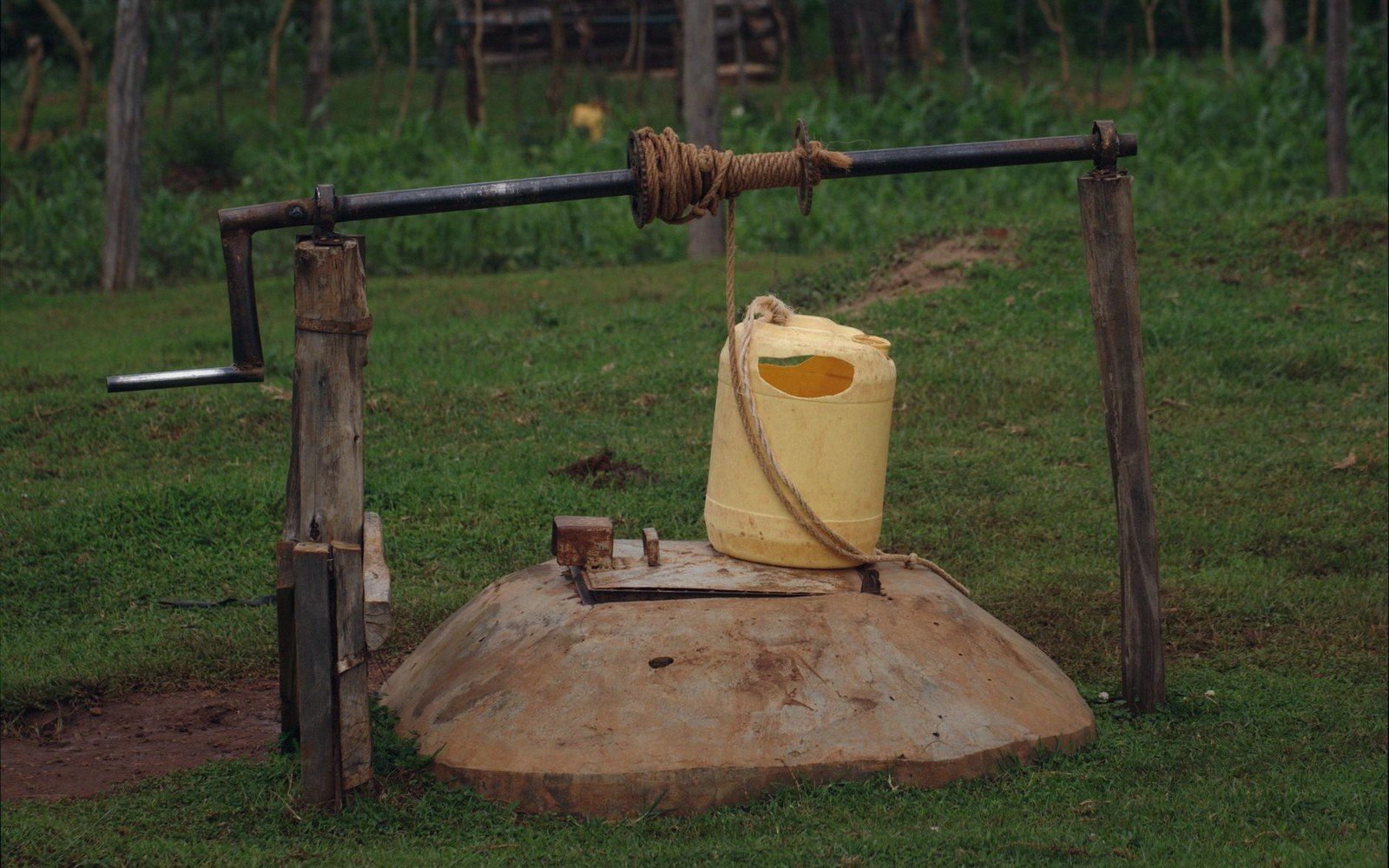 Next in Living With the SeaThe Freshwater LensFresh water on an atoll floats in a thin lens above the seawater beneath. How the lens forms, how easily it is contaminated or over-drawn, and why rainwater catchment is not a supplement but a foundation.Read it →
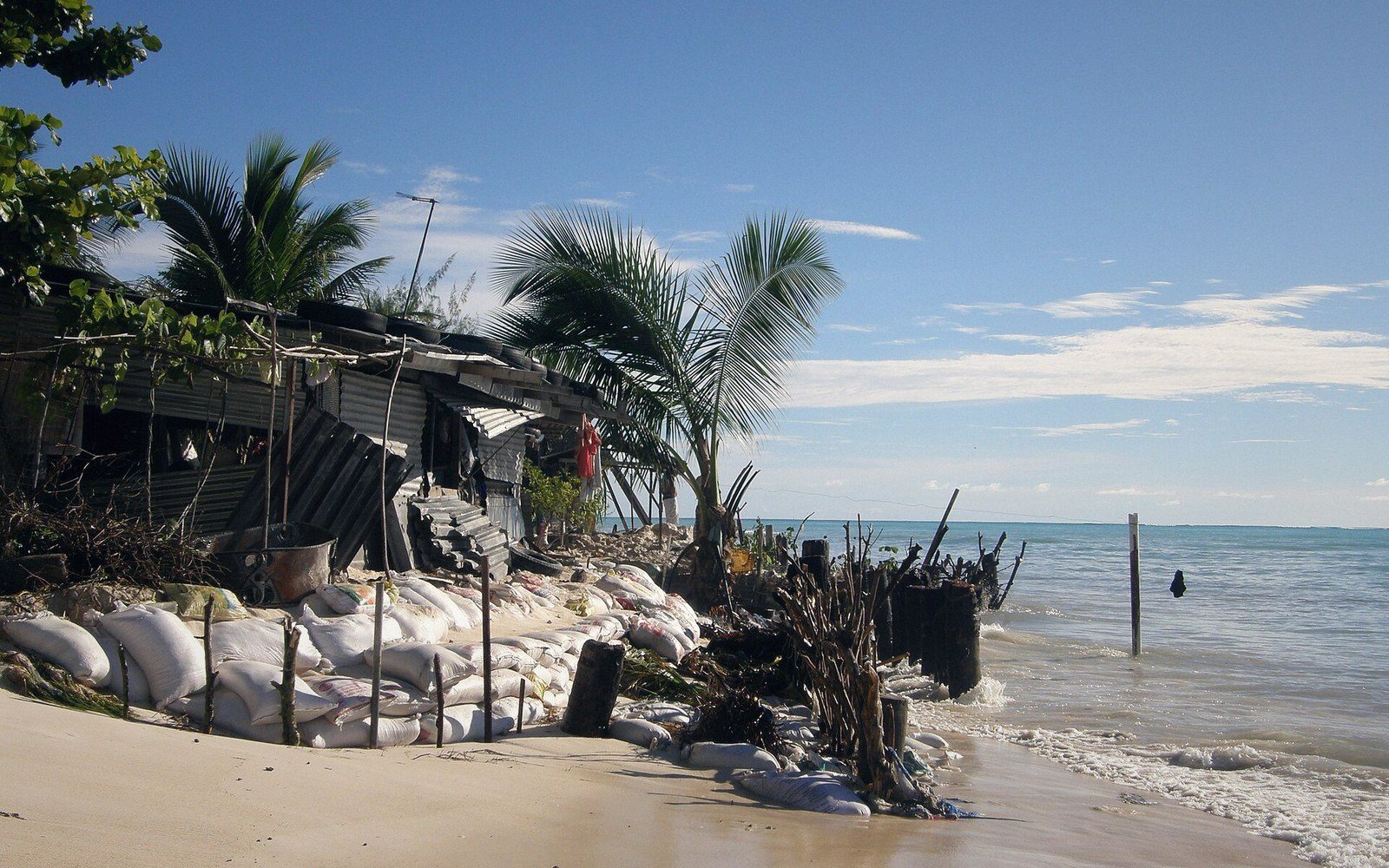 The Highest Ground Is a Few MetresWhat sea-level rise means for a country with almost no elevation: inundation, salt intrusion into the lens, coastal erosion, and the difference between the headline and the mechanism. Factual, without doom framing or greenwash.
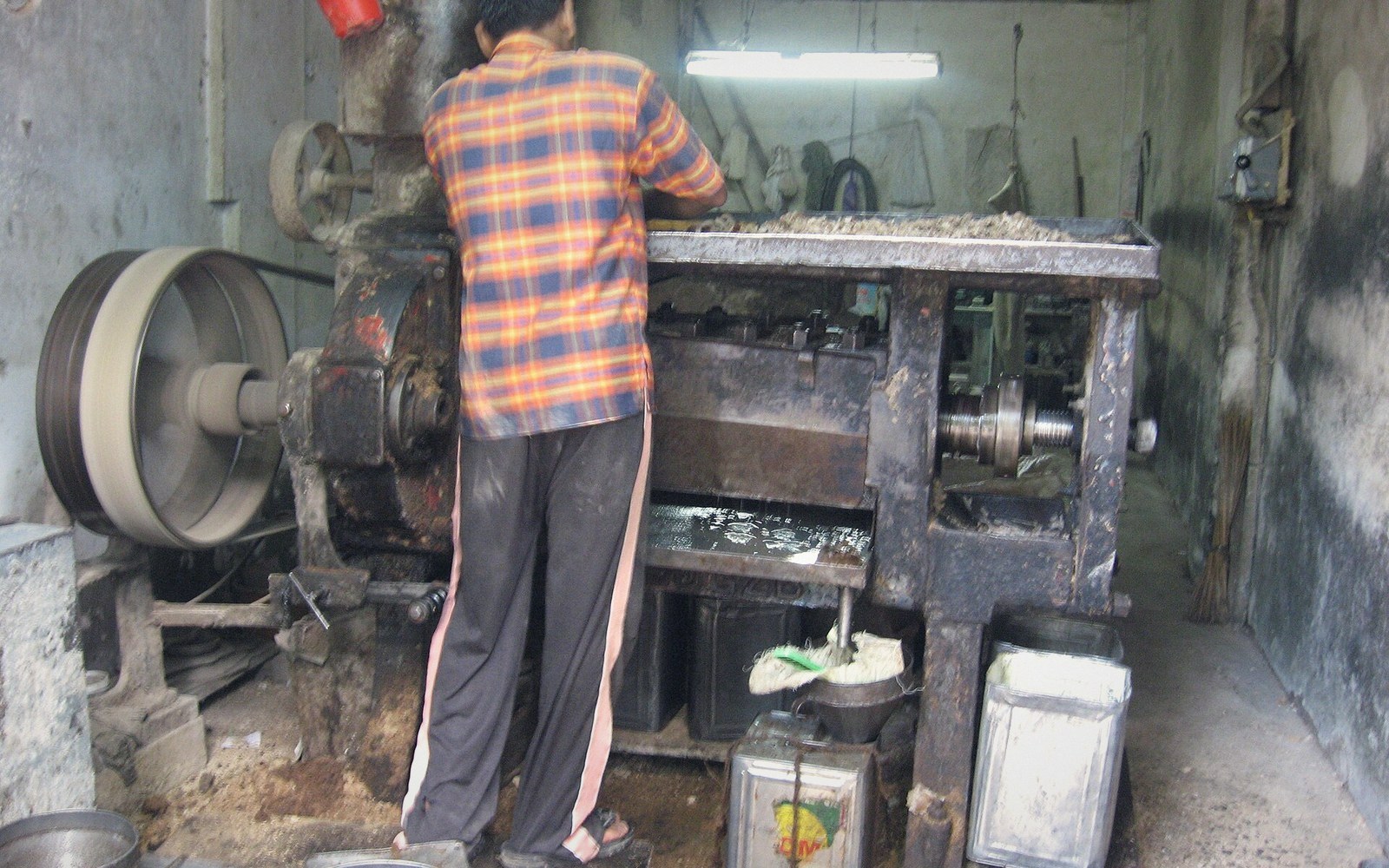 Copra Holds the Outer Islands TogetherDried coconut as the outer islands' cash crop: how it is produced, how it is shipped, and the role it plays in keeping remote populations viable.