Copra Holds the Outer Islands Together
The dried meat of the coconut is not an export curiosity. On the outer islands, it is the reason there is a cash economy at all.
01What Copra Is and How It Is Made
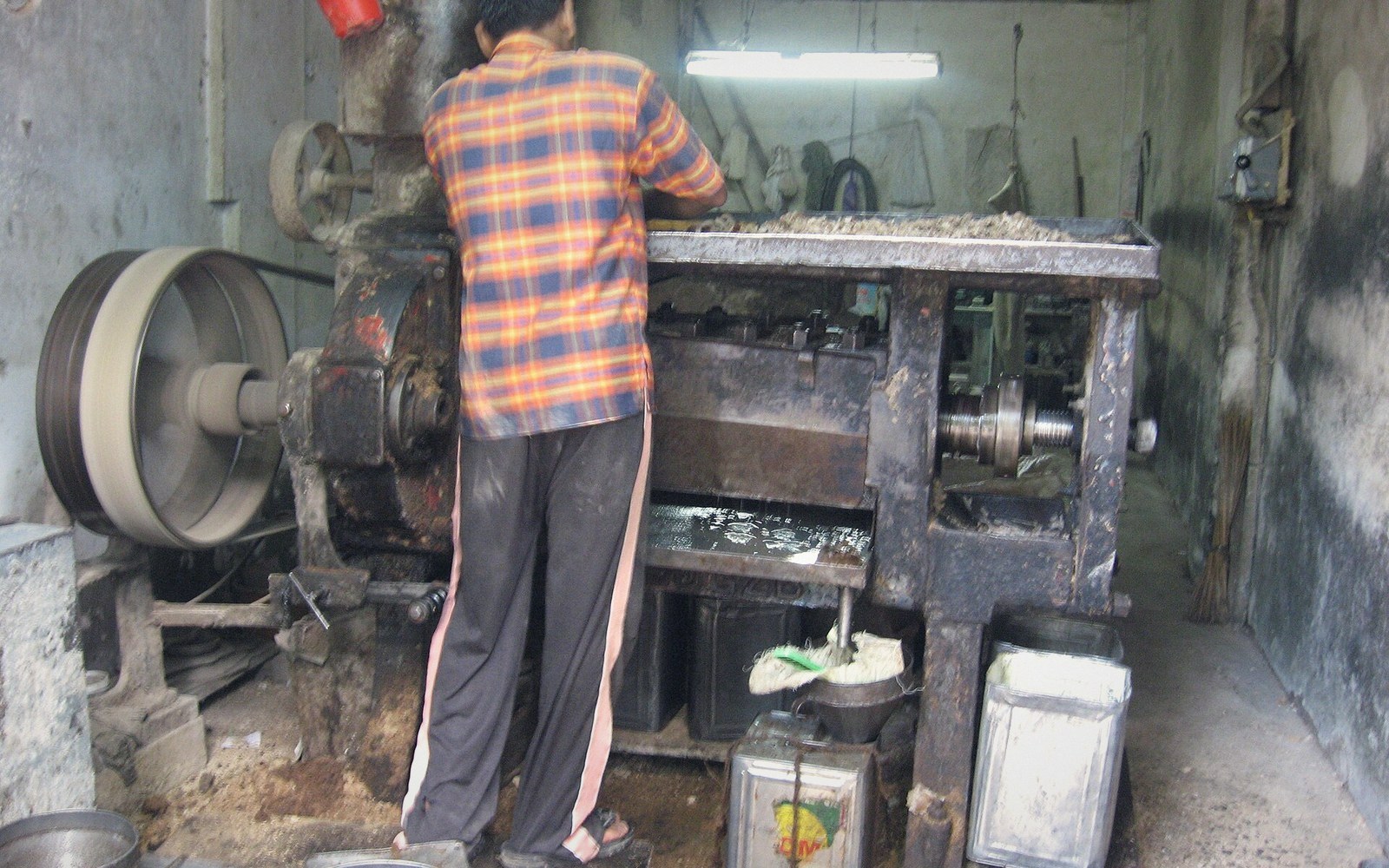
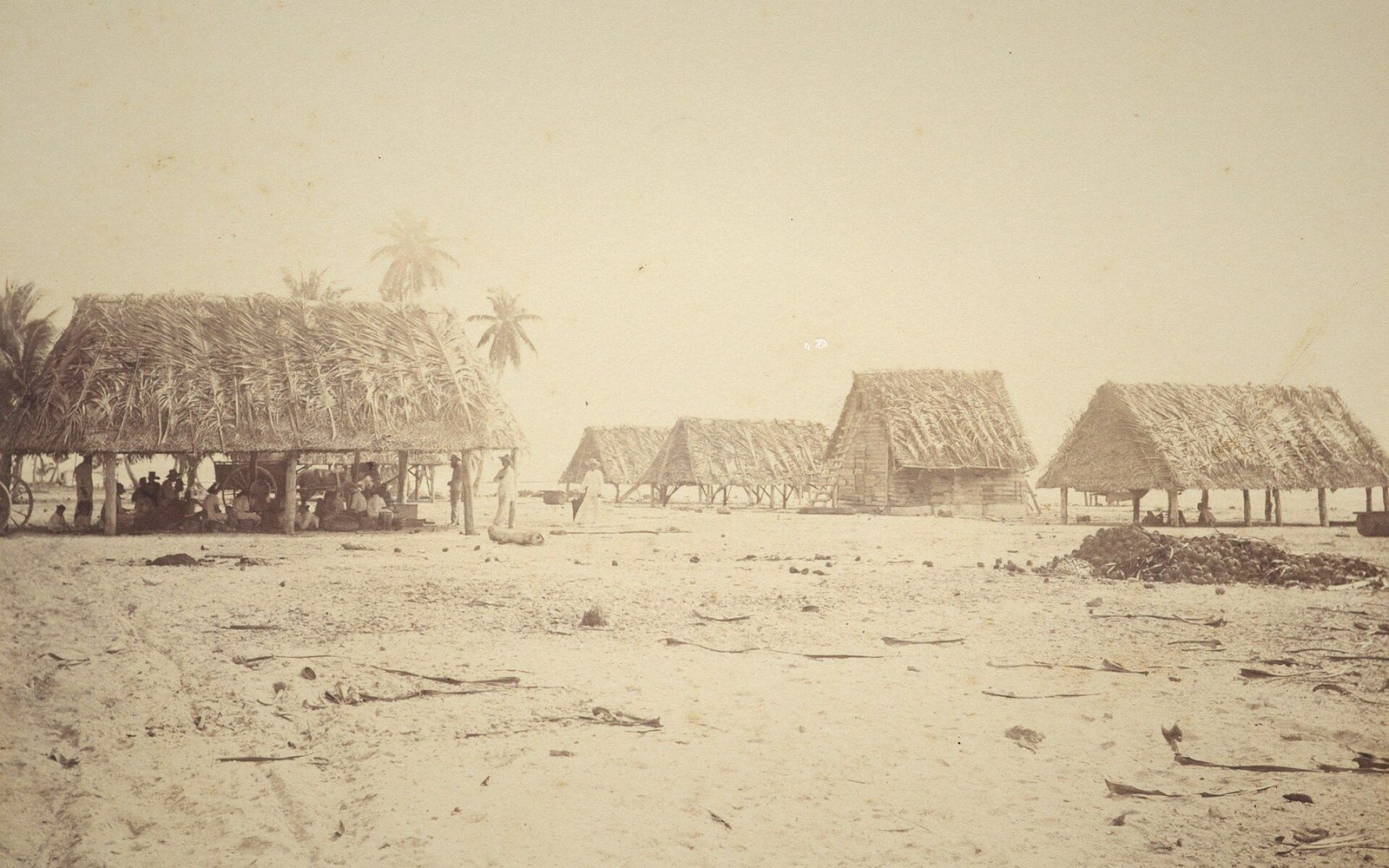
Copra is dried coconut flesh — the white meat split from the husk, dried until it can be stored and shipped without spoiling, then pressed at destination for coconut oil used in soap, margarine and animal feed. The process is as old as the trade itself, and on the Gilbert Group's outer atolls it has changed relatively little. A family cuts mature nuts from the palms that stand just above the storm-wave line, halves them, scoops or leaves the flesh inside the shell, and dries it over a smoky fire or, where frames are available, in the open sun. Sun-dried copra fetches a better price; smoke-dried is more reliable in the frequent wet periods. The result is a dense, oily product that keeps well enough to wait for a ship.
The coconut palm — the tree that grows on every islet, salted and stormswept as they are — is almost uniquely suited to atoll conditions. Its roots tolerate brackish soil, its crown survives wind that would shred most trees, and it produces year-round. On islands where the freshwater lens sits only a metre or two below the surface and cultivable soil is a thin strip between the beach and the lagoon flat, the coconut is not just the cash crop: it is the only crop of any commercial scale.
02The Ship Is the Economy
Dried copra is heavy and bulky relative to its value. It cannot be flown out — the economics do not come close to working, and flights between island groups are already constrained by runway length and fuel. What moves copra is the inter-island vessel, working a slow circuit through the outer islands, offloading supplies and collecting sacks. The schedule is irregular and the interval between calls can stretch to weeks or longer depending on weather, fuel availability and the ship's state of repair. Families time their cutting and drying around an expected call and then wait.
The Kiribati government subsidises copra buying precisely because the market logic alone would not sustain it. At world market prices for coconut oil, the cost of collecting small volumes from atolls spread over thousands of kilometres of ocean would make the trade unviable without support. That subsidy is a deliberate policy choice: letting copra fail would remove the single reliable cash income from outer-island households and accelerate migration to South Tarawa, which is already running at densities that strain water and sanitation infrastructure. Copra, in this reading, is not really an agricultural export. It is a mechanism for distributing money to places that have no other way to receive it.
03Viable Enough to Stay
The outer atolls are not wealthy places. Copra income is modest, supplemented by subsistence fishing, remittances from family members working in Tarawa or abroad, and occasional government employment. But modest and regular is different from nothing. A family that can sell copra when a ship arrives has the means to buy rice, kerosene, tools and the occasional outboard motor repair. Remove that cash flow and the island tips from a working community into a place people can no longer afford to stay.
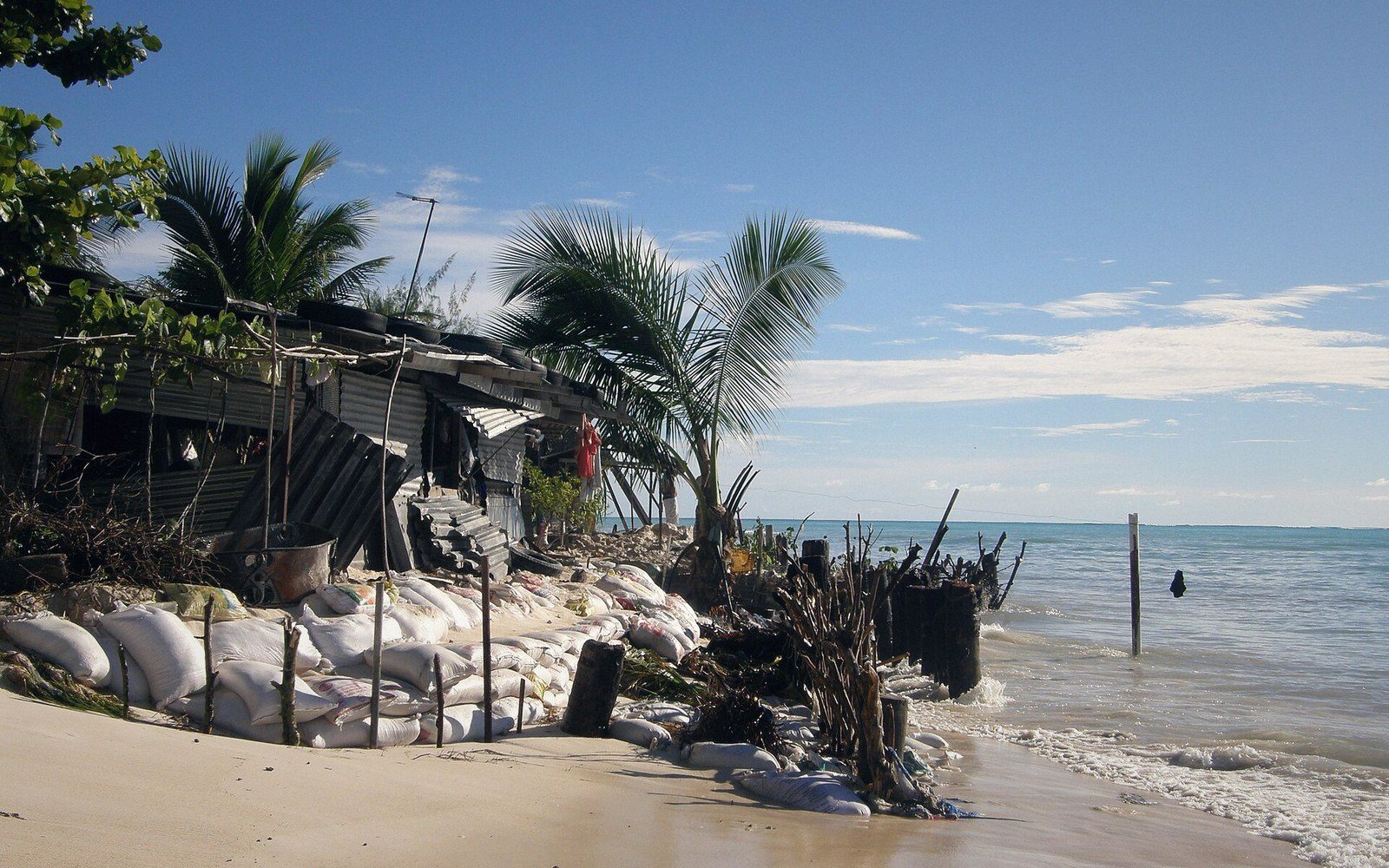
This is why discussions about outer-island viability — in the context of population policy, infrastructure investment, or the longer-term consequences of sea-level rise — always return to copra. Not because it is glamorous or growing, but because nothing has replaced it. The palm tree standing at the back of the beach, unremarkable in every aerial photograph of every atoll, is doing quiet structural work.
 Next in Living With the SeaMigration With DignityThe national policy of building skills so that if people must move, they move as sought-after migrants rather than as refugees. Explained as policy, not as prophecy.Read it →
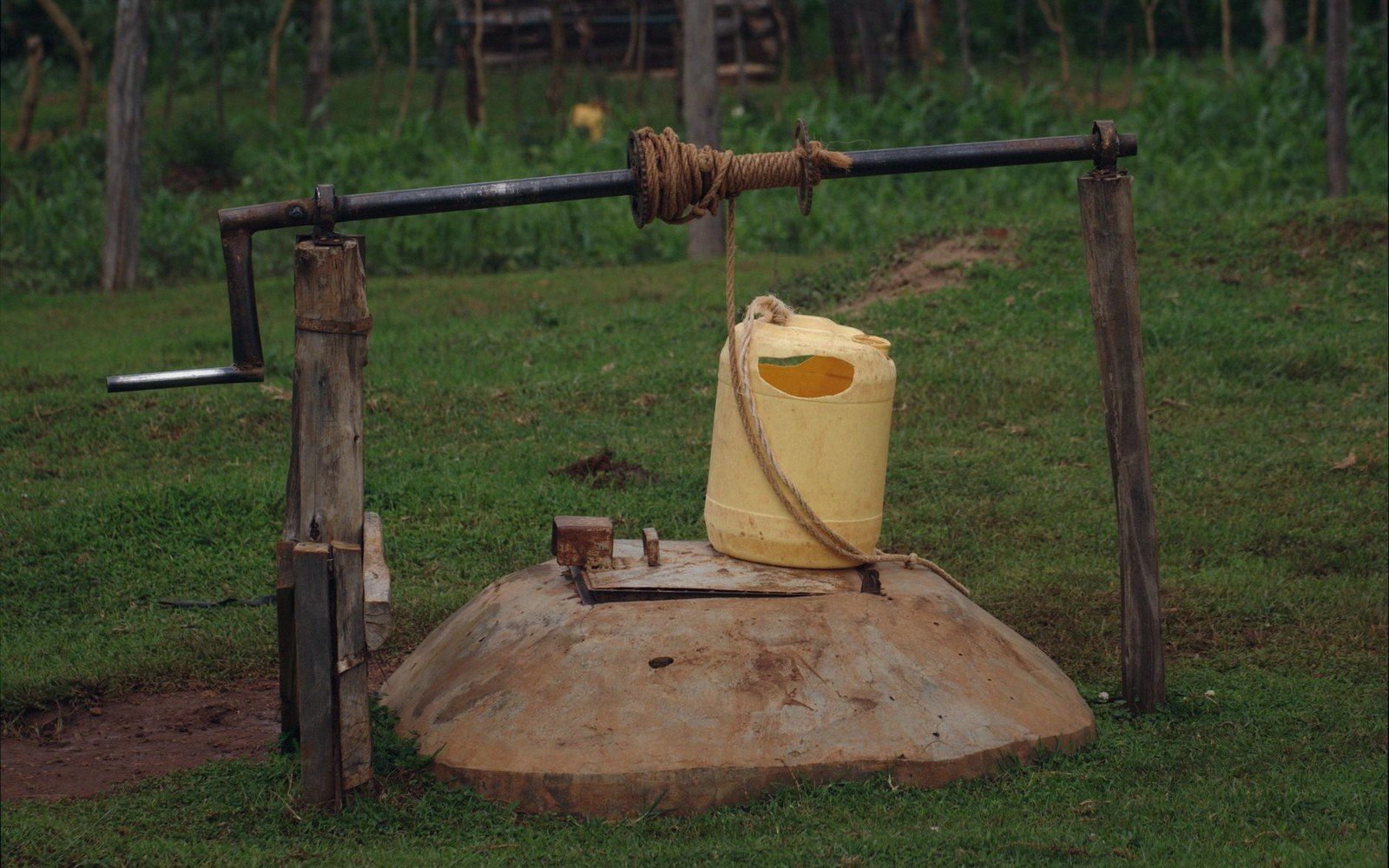 The Freshwater LensFresh water on an atoll floats in a thin lens above the seawater beneath. How the lens forms, how easily it is contaminated or over-drawn, and why rainwater catchment is not a supplement but a foundation.
 The Highest Ground Is a Few MetresWhat sea-level rise means for a country with almost no elevation: inundation, salt intrusion into the lens, coastal erosion, and the difference between the headline and the mechanism. Factual, without doom framing or greenwash.