The Gilbert and Ellice Islands Colony
Two archipelagos, one administration, and a divorce that took several years to complete.
01How the Colony Was Assembled
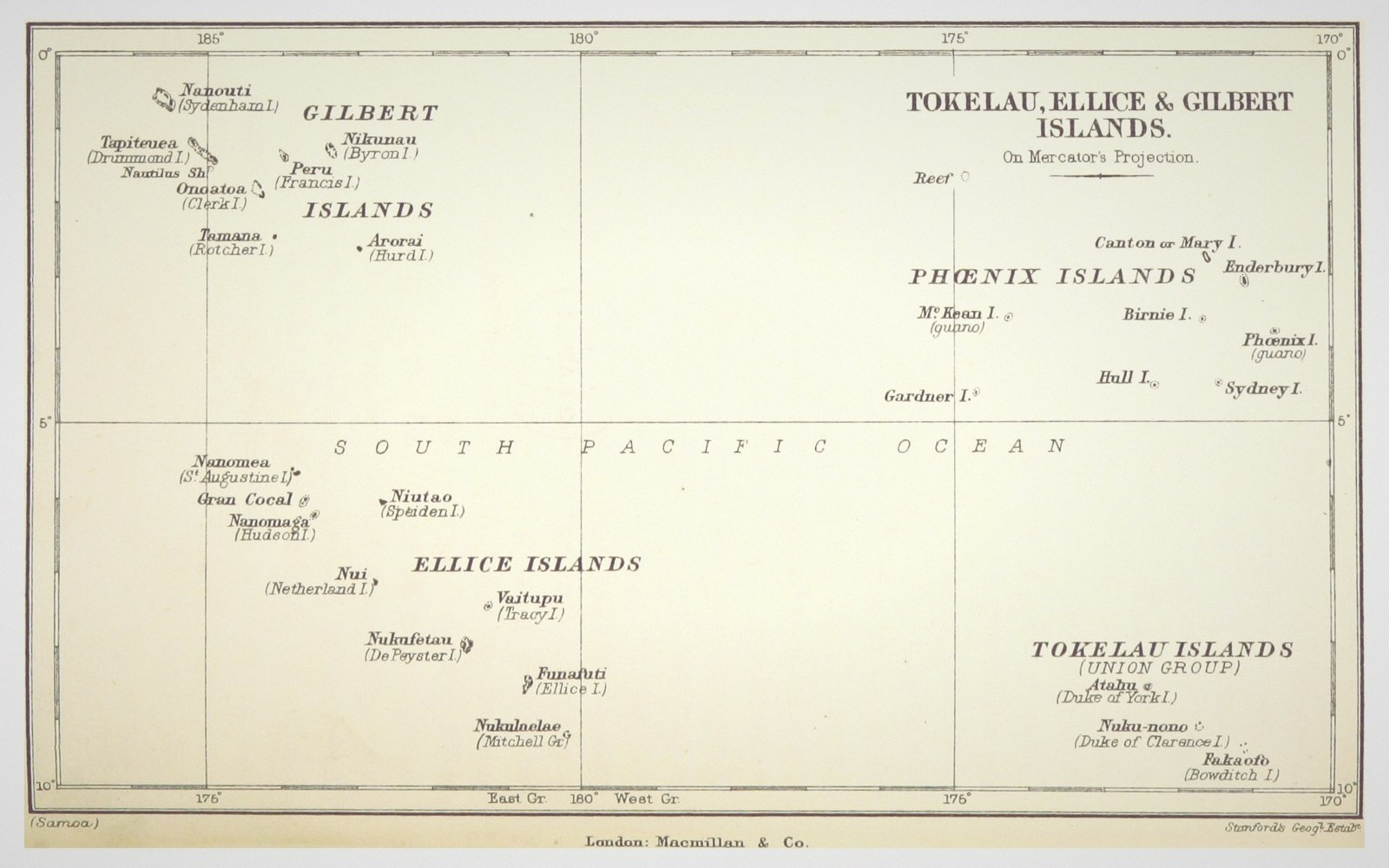
Britain's interest in the central Pacific was neither rapid nor particularly enthusiastic. Whalers and traders had worked the Gilbert Islands since the early nineteenth century, and the labour trade — recruiting islanders for plantations in Fiji, Queensland and Samoa — brought a sufficiently ugly record of violence and kidnapping that London eventually felt compelled to act. A Protectorate over the Gilbert Islands and the Ellice Islands was declared in 1892, with Captain E.H.M. Davis of HMS Royalist hoisting the flag. The arrangement was initially light: a British Resident Commissioner based on Tarawa, a handful of officers, and the expectation that things would largely run themselves.
The Phoenix Islands were added incrementally, as was Fanning Island (now Fanning/Tabuaeran) and Washington Island (Teraina) in the Line group. Ocean Island — Banaba — had been known as a phosphate deposit since 1900, and its economic importance ensured it was folded into the Colony's formal structure when it became a Crown Colony in 1916. The phosphate revenue that flowed out of Banaba for the next half-century was vastly greater than anything the coconut economy of the Gilbert or Ellice islands could generate; the story of that mining and the displacement of Banaba's people is one of the Colony's darkest chapters. The administrative headquarters was on Ocean Island before the Second World War, was evacuated during the Japanese occupation, and returned to Tarawa only after the war.
02Governing Across an Ocean
The practical challenge of running a colony spread across millions of square kilometres of ocean was never quite solved. The Resident Commissioner — and later the High Commissioner — issued regulations, collected head tax, and maintained a Native Magistrates system that worked through the islands' own maneaba (meeting house) structures while simultaneously trying to shape them toward British procedural norms. The balance between imposed administration and existing chiefly or council authority was never stable, and shifted depending on the officer and the era.
The Ellice Islands — the people now known as Tuvaluans — were Polynesian in language, culture and identity, while the I-Kiribati of the Gilberts are Micronesian. The two groups were joined by colonial convenience rather than any common history, their islands separated by hundreds of kilometres of open water. A single administrative structure meant the Ellice Islands were persistently underrepresented: they had fewer people, less land, and less strategic importance in British eyes. The Second World War brought American bases, the Battle of Betio in November 1943, and Japanese occupation of much of the Gilberts — all of which left the Colony structurally altered and economically dependent on outside aid in the reconstruction period.
In the postwar decades, the Colonial Office pushed incrementally toward greater local participation: an advisory council, then an elected House of Representatives, then a widened franchise. By the early 1970s, independence was clearly coming. But by then the Ellice Islanders had already decided they did not want to arrive at independence inside a Gilbertese-majority state.
03The Separation
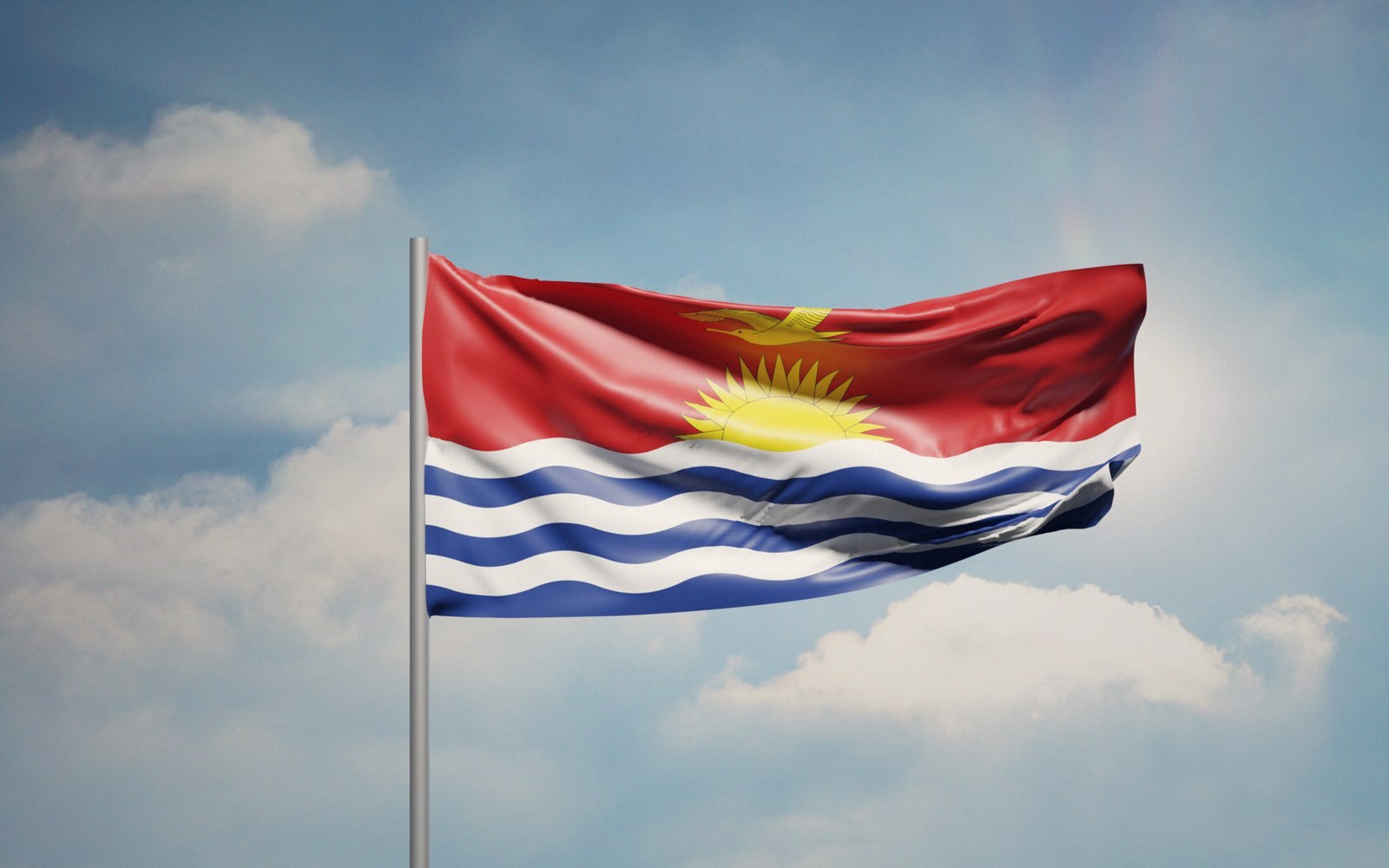
The Ellice Islands' move toward separation was not a sudden rupture. Concerns about political and economic marginalisation had built across the 1960s, and by 1974 the question was put to a formal plebiscite. The Ellice Islands voted — by a substantial majority — to separate from the Colony. The process was legally careful and took time: the Ellice Islands became a separate British territory, Tuvalu, in 1975, and fully independent in 1978. The Gilbert Islands, with the Phoenix and Line islands, followed: the Gilbert Islands Colony became the independent Republic of Kiribati on 12 July 1979.
What each country inherited told the story of the colonial period plainly. Tuvalu inherited next to nothing in terms of revenue or infrastructure — Banaba's phosphate had run out by 1979, and the deposits were never Tuvaluan anyway. Kiribati took on a fishing zone of extraordinary size but an economy with almost no productive base beyond copra and external aid. The independence settlement and what it left behind is a separate chapter; what the Colony bequeathed was a constitutional framework, a fishing zone, and a development problem that two island nations have navigated in different directions ever since.
--- An independent guide to Kiribati. Not a tour operator, booking service or official tourism body, and not affiliated with the Government of Kiribati.
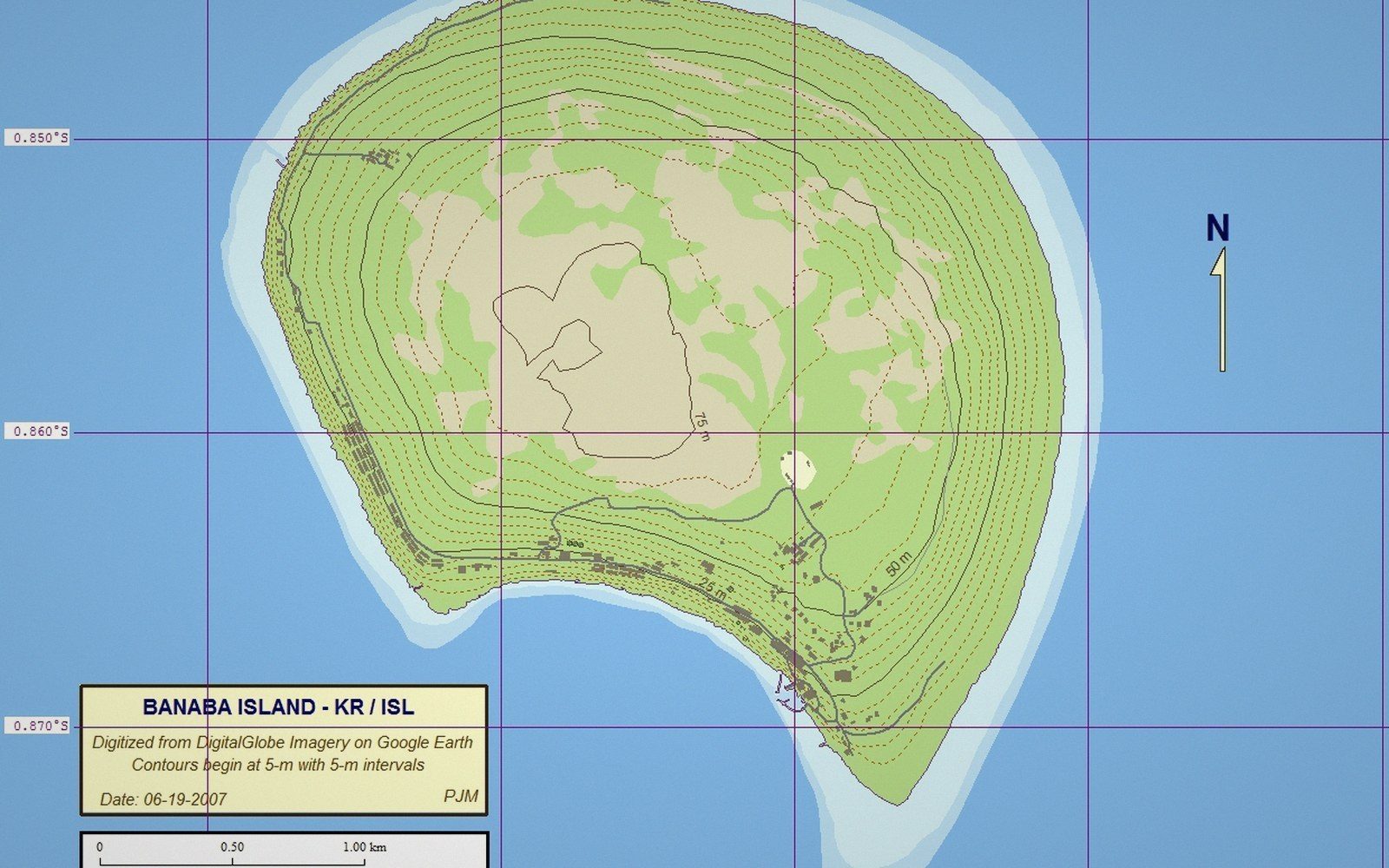 Next in HistoryPhosphate and BanabaThe mining of Banaba, the displacement of its people, and the revenue that funded an administration. One of the harder chapters in the country's record, told plainly.Read it →
 Betio, November 1943Three square kilometres, seventy-six hours, and one of the costliest assaults of the Pacific war. The battle described factually and soberly, and the reason the guns are still where they stopped.
 Independence, 1979The route to independence, the constitutional settlement, and what a newly independent state inherited.
 The Relics Are Still on the BeachCoastal guns, bunkers and wrecks in the landscape at Betio and elsewhere — what they are, why they remain, and how a place lives alongside them.