The Relics Are Still on the Beach
Seventy-five years of rust, coral and tide have not moved the evidence very far.
01What Remains, and Why
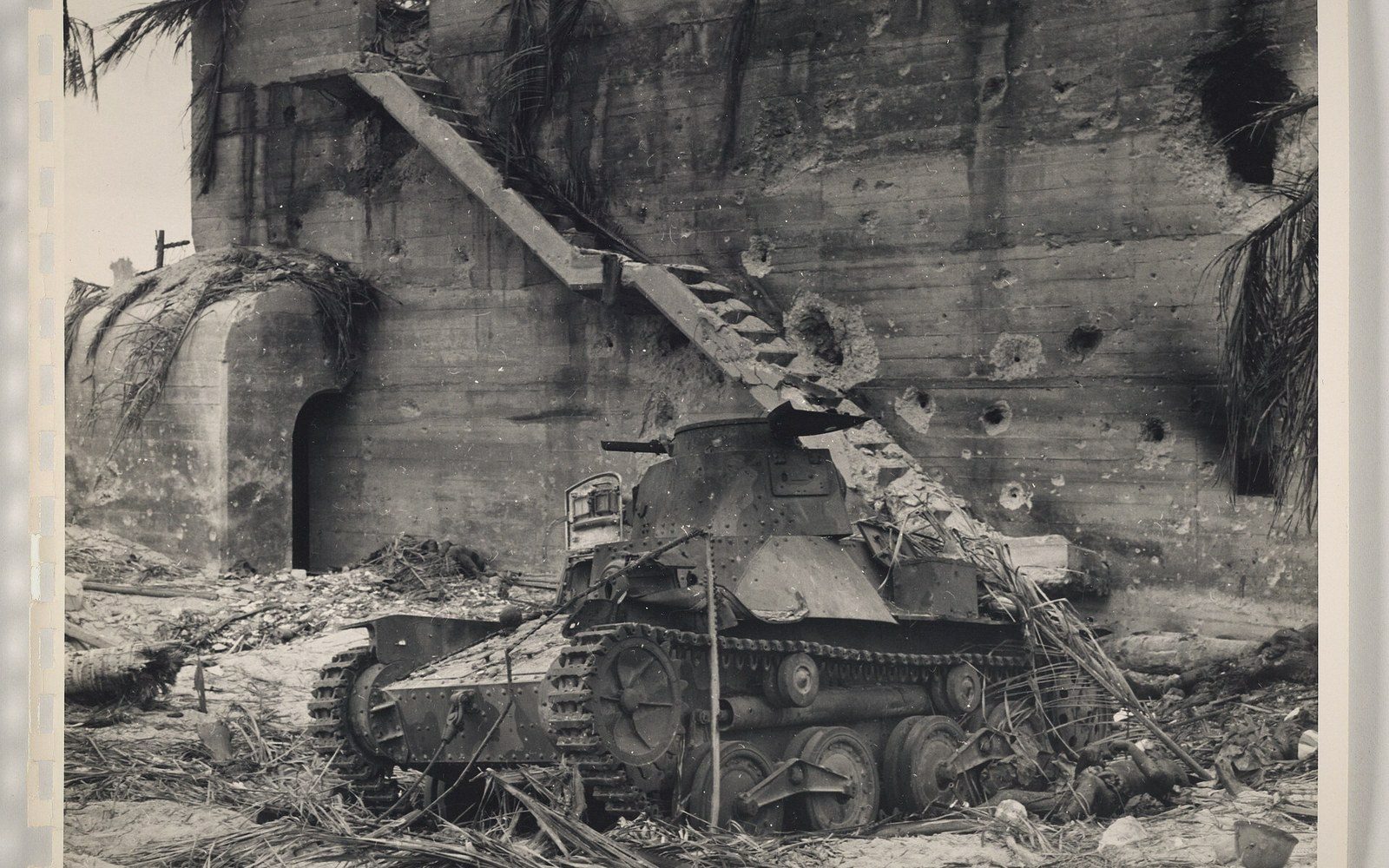
Walk the western end of Betio — the flat, crowded islet that anchors South Tarawa — and you are walking through a battlefield that was never cleared. Japanese coastal defence guns still sit in their concrete emplacements above the beach. Bunkers remain where the engineers who built them left them, partly buried now under decades of sand and vegetation, their apertures facing out to the same approaches the American landing craft crossed in November 1943. A Sherman tank called "Cecelia" corrodes in the lagoon shallows where it stalled during the assault. The sea has claimed parts of the site; the land holds the rest.
The reason none of this moved is straightforward: the hardware is enormous, the infrastructure to remove it does not exist on a small atoll, and for most of the post-war period there was no money and little political priority to attempt it. The guns are naval ordnance — coastal defence pieces, some of them eight-inch weapons removed from Singapore — set in reinforced emplacements that were designed to survive naval bombardment. They did. The bombardment that preceded the Marine assault on Betio in November 1943 was one of the heaviest of the Pacific war, and the guns were still operational when the landing began. Moving them now would require equipment that would be expensive to bring to an island with a small port and no heavy construction industry.
02A Landscape With Memory Built Into It
The relics are not a museum, and Betio is not a memorial park. It is one of the most densely populated pieces of land in the Pacific, with houses, a port, a market, workshops and schools built around, on top of and immediately beside the wartime structures. Children play near the gun pits. Fishermen store gear in their shade. This is not disrespect — it is the ordinary business of a community that inherited a landscape already full of objects it did not put there.
The I-Kiribati relationship with the wartime material is complicated by the fact that the battle was not their war. The Japanese occupied the Gilberts from late 1941; the Americans assaulted to take them back. The civilian population of Betio was removed before the assault. When people returned, they returned to a destroyed and littered island that had been fought over by two foreign powers. The relics are, in that sense, someone else's hardware, left behind twice: first by the Japanese who built them, then by the Americans who lacked any reason to remove them.
Documentation and preservation efforts have been intermittent. Japanese and American veteran groups have visited; dive operators run tours to the submerged wrecks in the lagoon, including several landing craft and a Japanese freighter. Above the waterline, the concrete structures are slowly losing definition as tropical weathering does what bombardment and time together accomplish. Vandalism has taken some material; salvage has taken more — scrap metal has economic value on an island where metal must otherwise be imported.
Beyond Betio, traces of the occupation and the wider Pacific war exist on other atolls. Makin (now officially Butaritari) in the northern Gilberts — saw a US Marine Raider operation in August 1942, months before Tarawa, and retains physical evidence of that engagement. The broader geography of the Gilbert Group placed these islands across Japanese supply lines, which is why they were fortified and why the Americans needed them.
What the beach at Betio holds is not a carefully managed heritage site with interpretation panels and conservation schedules. It is a living neighbourhood alongside evidence of extreme violence, weathering in the open air. That is, in its own way, an accurate record of what atolls do with what is left on them: they absorb it, slowly, and the community continues.
--- An independent guide to Kiribati. Not a tour operator, booking service or official tourism body, and not affiliated with the Government of Kiribati.
 Next in HistoryBetio, November 1943Three square kilometres, seventy-six hours, and one of the costliest assaults of the Pacific war. The battle described factually and soberly, and the reason the guns are still where they stopped.Read it →
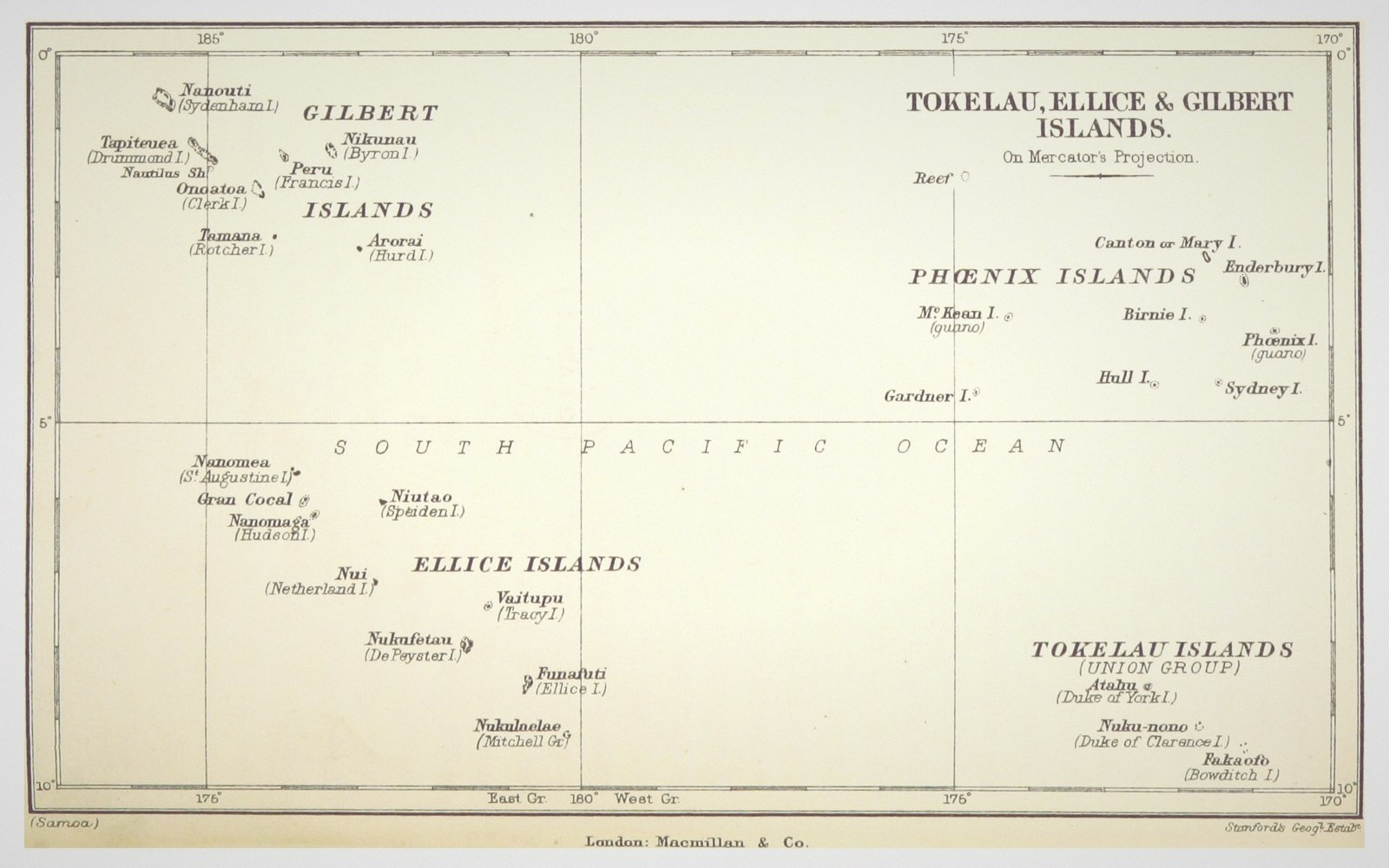 The Gilbert and Ellice Islands ColonyThe colonial administration, how the territory was assembled and governed, and the separation that produced two countries.
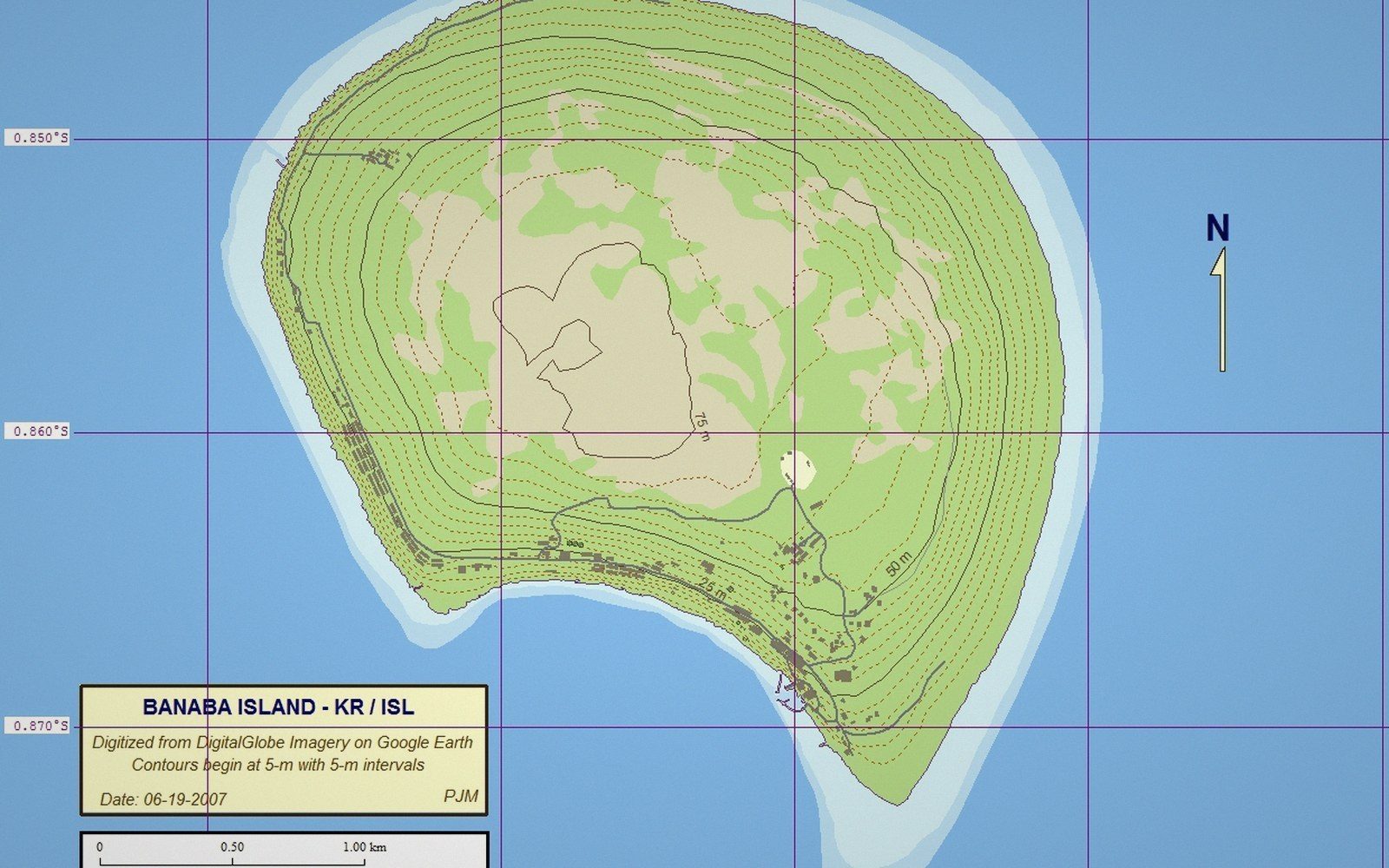 Phosphate and BanabaThe mining of Banaba, the displacement of its people, and the revenue that funded an administration. One of the harder chapters in the country's record, told plainly.
 Independence, 1979The route to independence, the constitutional settlement, and what a newly independent state inherited.