Tuna and the Licence Economy
01The Ocean Is the Asset
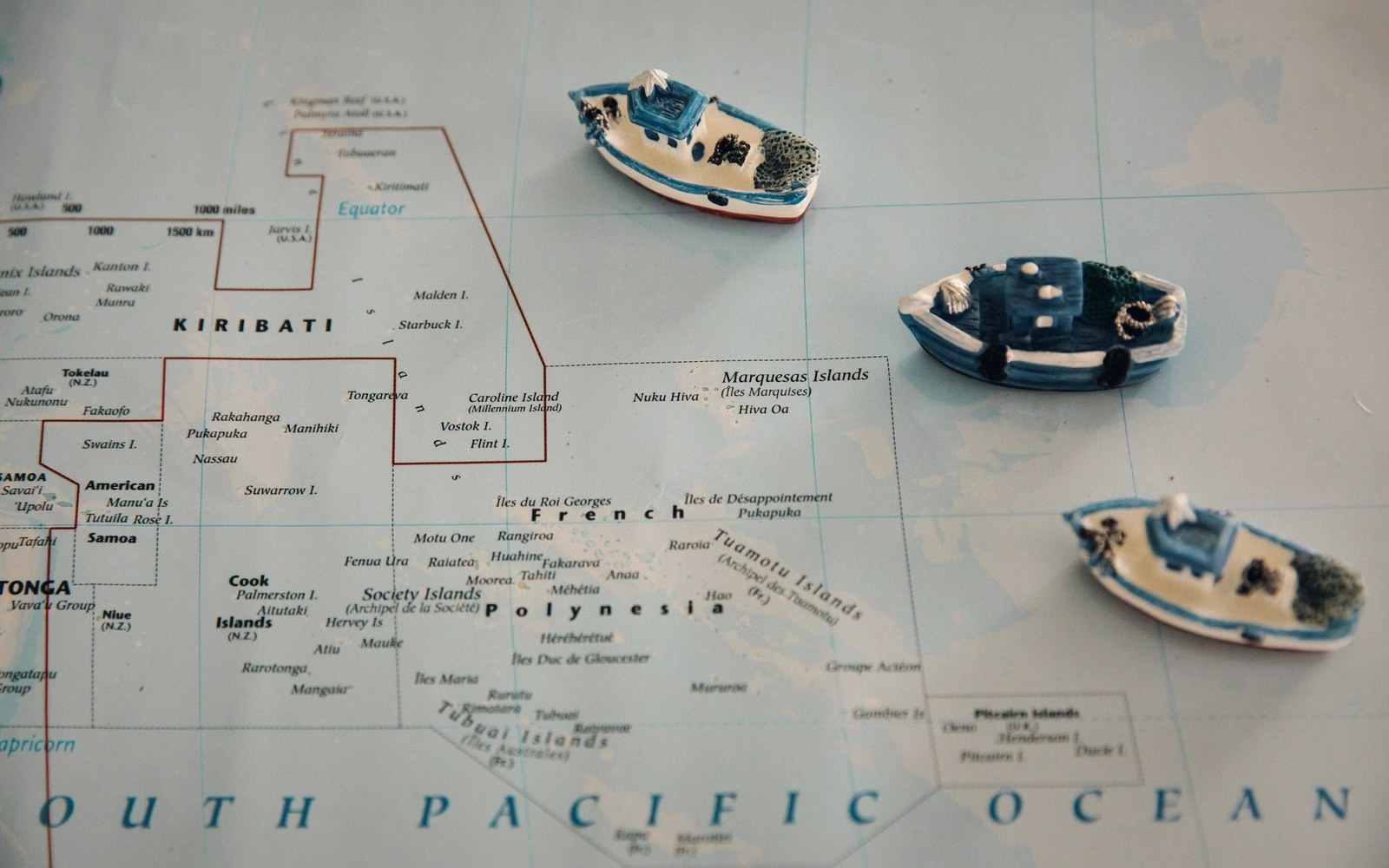
Kiribati has almost no arable land, no mineral exports worth counting since the phosphate on Banaba ran out, and a population whose cash needs cannot be met by copra alone. What it does have is ocean — roughly 3.5 million square kilometres of exclusive economic zone, one of the largest in the world, spread across three island groups separated by thousands of kilometres of open Pacific. In that water swims the asset that actually funds the state: skipjack and yellowfin tuna, in quantities that make the western and central Pacific the most productive tuna fishery on earth.
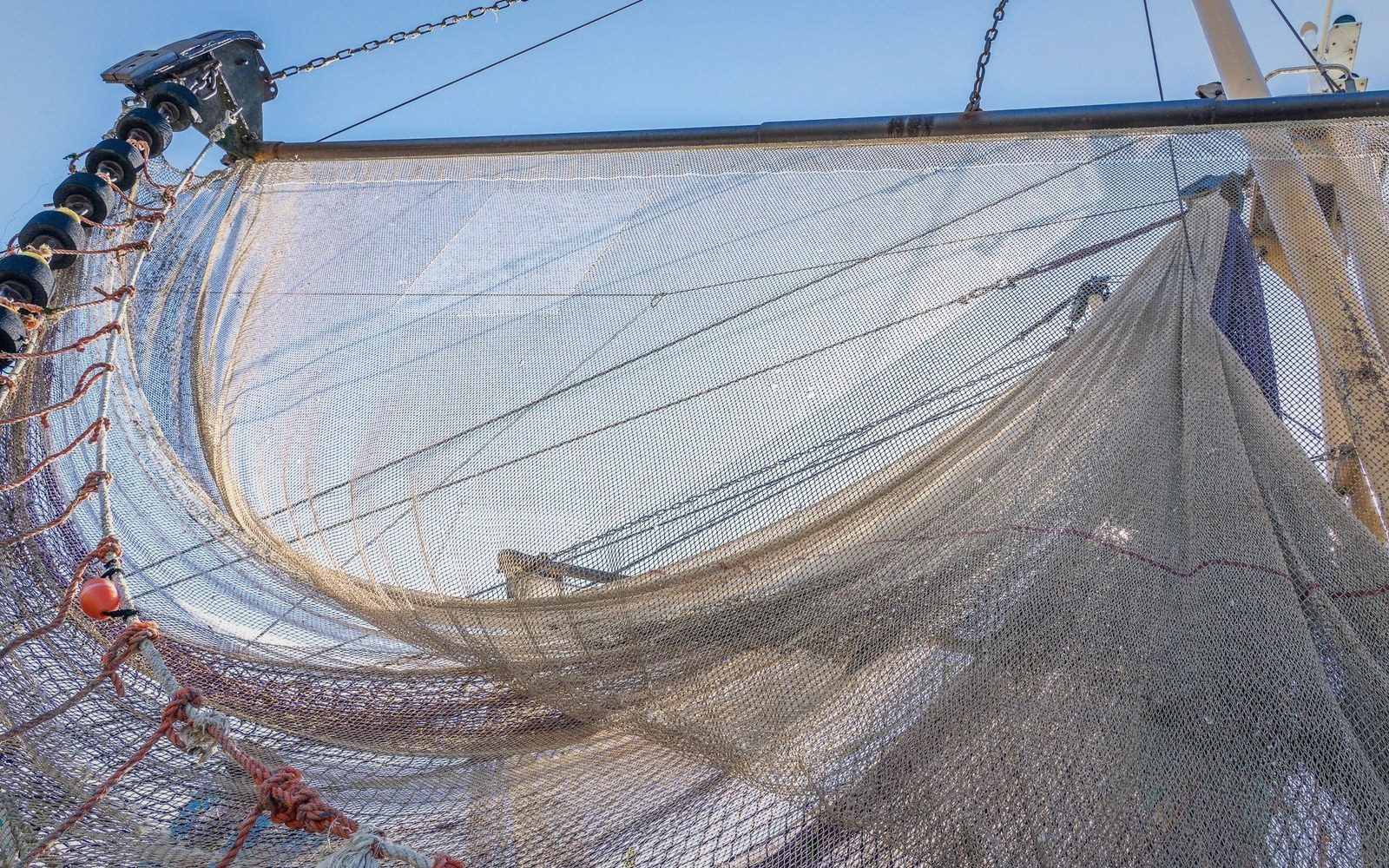
The mechanism that turns fish into government revenue is the fishing licence. Foreign fleets — principally from the United States, Japan, South Korea, Taiwan and China — pay for the right to fish within Kiribati's EEZ. They send purse-seiner and longline vessels into those waters, and the fees they pay flow directly into the national budget. In some years, fishing licence revenue has accounted for more than half of total government income. That single figure explains almost everything about Kiribati's fiscal situation, its foreign policy choices, and the chronic anxiety of its budget planners.
02How the Licence System Works
The framework governing most of this fishing is the Nauru Agreement, a treaty among eight Pacific island nations — the Parties to the Nauru Agreement, or PNA — that together control waters containing roughly half the world's skipjack tuna. Kiribati is a founding member. The agreement, originally signed in 1982 and significantly strengthened since, gives member states collective bargaining power they could never exercise alone. The key instrument developed under it is the Vessel Day Scheme, which replaced the older system of selling licences by the vessel or by tonnage with something more transparent: a fishing day. Each PNA member is allocated a number of fishing days per year. Vessels buy those days at a minimum benchmark price. The system creates a clear unit of trade, limits total fishing effort, and gives small island governments a more legible revenue stream.
The benchmark price per vessel day has risen considerably since the scheme matured, partly because PNA members have been disciplined about not undercutting each other and partly because demand is genuine — the tuna in these waters is the feedstock for much of the canned tuna consumed globally. When a purse-seiner buys a vessel day in Kiribati's zone, it is buying access to some of the most productive skipjack habitat in the Pacific, driven by the convergence of currents, warm surface water and the baitfish aggregations that follow.
The US treaty with Pacific island nations provides a separate, lump-sum access arrangement for the American purse-seine fleet, negotiated periodically and distributed among participating countries including Kiribati. That payment, supplemented by individual vessel day sales and by fees from longliners targeting yellowfin and bigeye, constitutes the bulk of what Kiribati earns from its ocean.
03What the Dependency Means
A national budget that rests heavily on a single commodity extracted by foreigners from a natural system whose abundance fluctuates with climate is inherently fragile. The Pacific tuna catch is sensitive to El Niño and La Niña cycles: when the warm water pool that concentrates skipjack shifts east toward Kiribati's Line Islands, licence revenue for the Gilbert Group may decline. The revenue swings are real and they are not under Kiribati's control.
There is also the structural problem of value capture. The fish are caught in Kiribati's water but processed and sold elsewhere. A vessel licensed to fish in the Kiribati EEZ will typically land its catch in Papua New Guinea, the Solomon Islands, or as far away as Thailand, where canneries operate. Kiribati sees the licence fee but not the processing margin, the transport margin, or the retail margin. Efforts to develop domestic processing capacity have been limited by the same geography that makes the country so difficult to operate in — land scarcity, remoteness from markets, and the cost of energy and infrastructure on small atolls. The fish pass through the zone and the value leaves with them.
The Revenue Equalisation Reserve Fund — RERF, the sovereign wealth fund established using phosphate revenue before the Banaba deposits were exhausted — provides a cushion. It is intended to buffer exactly this kind of revenue volatility, and its management is a perennial subject of national debate: how much to draw down, how much to preserve, and for how long it can backstop a state that cannot yet diversify away from licence fees. The fund's existence is one reason Kiribati has avoided the fiscal collapse that might otherwise follow a bad fishing year, but drawing it down faster than returns accumulate erodes the very cushion it was built to be.
04The Conservation Question
The Vessel Day Scheme imposes limits on total fishing effort, which is a genuine conservation tool, but the PNA framework is not universally regarded as sufficient. The central and western Pacific skipjack stock has generally been assessed as not overfished, which is a better outcome than most major fisheries have achieved, but yellowfin and bigeye face more pressure, and the ecosystem effects of large-scale purse-seining — particularly the use of fish aggregating devices, or FADs, which concentrate not only target species but juvenile tuna and bycatch — are a continuing concern among marine scientists.
For Kiribati, the conservation interest and the revenue interest are not simply opposed. A depleted stock earns nothing. The PNA has argued, with some force, that the Vessel Day Scheme's effort cap is a market mechanism for sustainability: fewer days sold means less fishing pressure, and higher prices per day mean members do not need to sell more days to compensate. Whether that logic holds as demand for tuna continues to grow is a question the Phoenix Islands Protected Area was partly designed to address — by closing a portion of the zone to commercial fishing entirely, creating a refuge whose benefits, in theory, spill over into adjacent fished waters.
05An Economy Floating on Access
What the licence economy ultimately represents is a country monetising geography — the fact that its EEZ happens to overlay one of the most productive stretches of ocean on the planet. The arrangement funds schools, clinics and the civil service. It also creates a dependency that planners, development economists and Kiribati governments alike have acknowledged for decades without fully resolving: the revenue is real, the fish are genuinely there, and the alternatives are not yet adequate to replace it. The ocean is not a metaphor for Kiribati's situation. It is, in the most literal fiscal sense, the ground beneath the budget.
 Next in Reef & OceanWhat Bleaching Actually DoesThe mechanism of coral bleaching, the difference between bleached and dead, and the consequences for an island whose land is built of reef material.Read it →
 Past the Reef EdgeThe reef flat, the crest and the drop into open ocean — the profile that defines an atoll's edge and why most of the country is vertical water.
 The Phoenix Islands Protected AreaOne of the largest marine protected areas on earth: what it covers, what it protects, and the trade-off a small economy accepted to create it.
 The Lagoon Is a SystemCirculation, flushing, sediment and the biology a lagoon supports — and how causeways and settlement change all of it.