What Bleaching Actually Does
Coral bleaching is not cosmetic damage — it is a coral animal under severe metabolic stress, and the difference between bleached and dead determines whether a reef comes back.
01The Mechanism
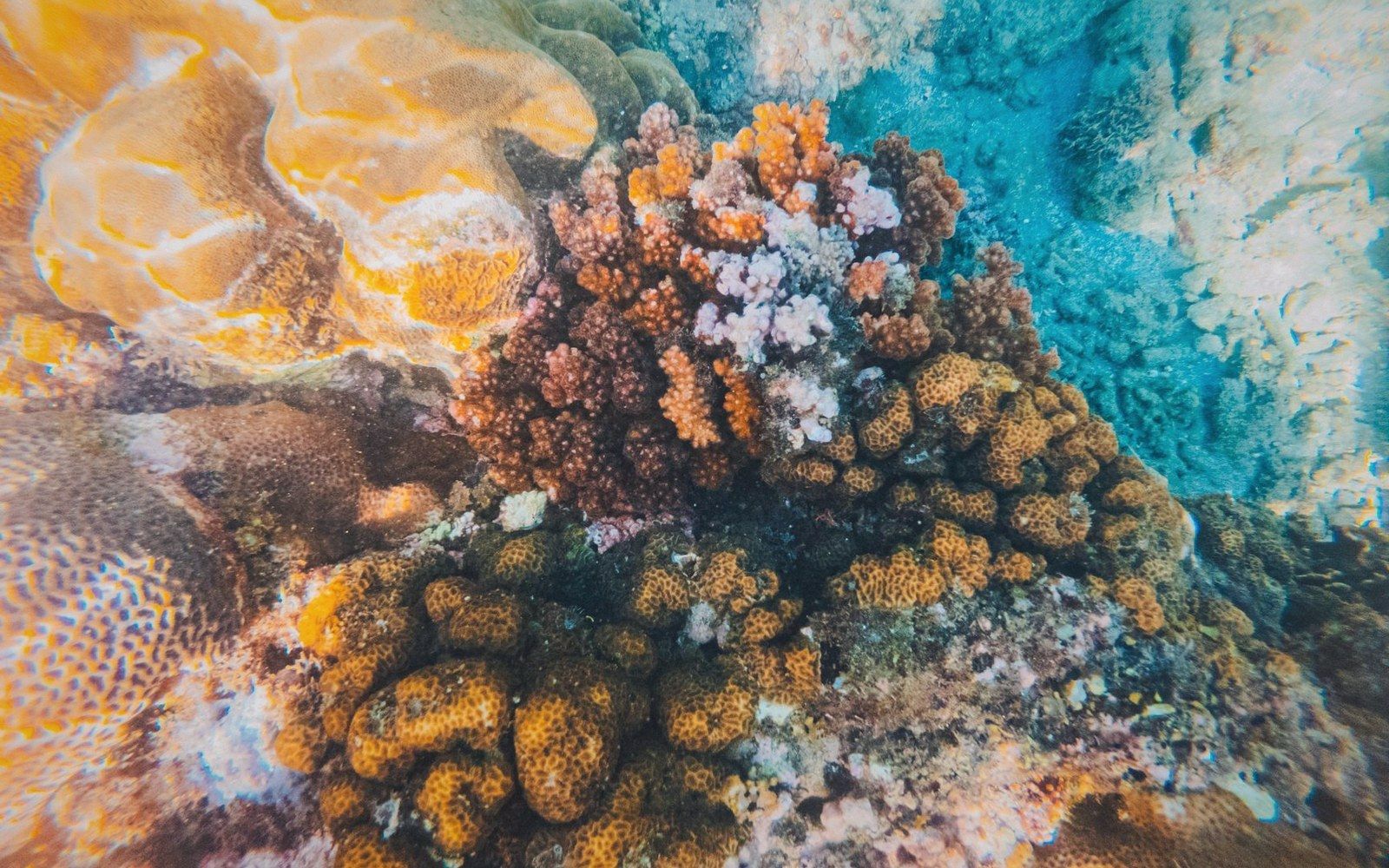
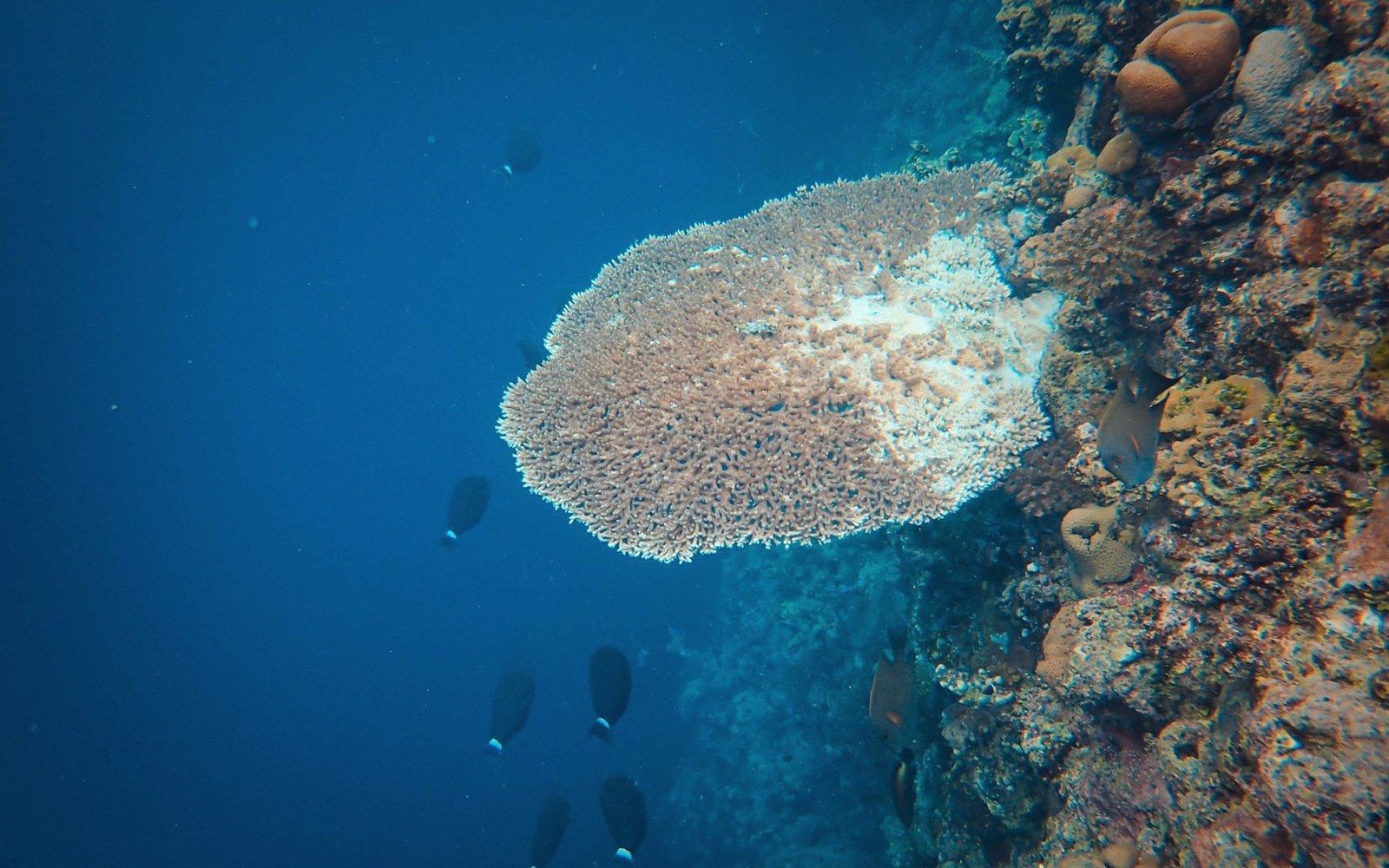
Coral is an animal, but it runs partly on sunlight. Each coral polyp houses millions of microscopic algae called zooxanthellae — a symbiotic partnership that provides the coral with up to ninety percent of its energy through photosynthesis, and gives reef structures their gold, brown and olive colours. When seawater stays a degree or two above the seasonal maximum for more than a few weeks, that partnership breaks down. The coral expels its zooxanthellae, the tissue turns translucent, and the white calcium carbonate skeleton shows through. That is bleaching: the coral is still alive, but it is starving.
A bleached coral is in crisis, not dead. It can re-absorb zooxanthellae if temperatures drop quickly enough, recover its colour, and resume normal growth. The window is narrow — typically weeks rather than months. The longer thermal stress persists, the more the coral weakens, the more vulnerable it becomes to disease, and the greater the share that does not recover. Mortality is not guaranteed by bleaching, but prolonged bleaching makes it probable.
Dead coral is structurally different in one further step: once the living tissue is gone, algae colonise the bare skeleton rapidly, turning it green or grey. A reef that looks monotonously green-furred after an event is not recovering — it is a reef structure whose builders have died and whose surface is now occupied by organisms that do not build.
02Why the Land Itself Is at Stake
For Kiribati, this is not only an ecological concern — it is a geological one. Atoll land does not come from tectonic uplift. It is reef-derived: coral fragments, shells and sand thrown up by wave action and accumulated over centuries. The reef flat constantly feeds that process. A living, actively calcifying reef generates the sediment and rubble from which islets are built and maintained. A dead reef gradually stops contributing material, and wave energy, which the reef crest would ordinarily absorb, reaches shorelines with less resistance.
The connection between reef health and the freshwater lens runs in the same direction. Coarser, wave-sorted sediment on a stable reef flat holds the geometry of the island that sits above it. When reef structure degrades, shoreline erosion accelerates, the island narrows, and the freshwater lens — already thin — becomes thinner and more easily contaminated by saltwater intrusion.
Bleaching events in the central Pacific have become more frequent and more severe as baseline ocean temperatures rise. Reefs that bleached periodically and recovered now face return intervals too short for full recovery before the next thermal anomaly. The cumulative effect is a net loss of living coral cover, a net loss of structural complexity, and a reduction in the biological productivity the reef system supports — fish, invertebrates and the food chains built on them.
03Bleached, Dead, or Recovering
The distinction matters practically because it determines what interventions — if any — are possible, and because misreading a bleached reef as merely changed in appearance misses the urgency. A reef forty percent bleached after a thermal event is not forty percent damaged in a fixed sense: depending on what temperatures do next, it could return toward full cover, or it could cross into mass mortality within a single season.
For a country whose highest ground is a few metres above the sea and whose islands are built of what the reef has already made, the condition of the reef is not background ecology. It is the land budget.
 Next in Reef & OceanPast the Reef EdgeThe reef flat, the crest and the drop into open ocean — the profile that defines an atoll's edge and why most of the country is vertical water.Read it →
 The Phoenix Islands Protected AreaOne of the largest marine protected areas on earth: what it covers, what it protects, and the trade-off a small economy accepted to create it.
 The Lagoon Is a SystemCirculation, flushing, sediment and the biology a lagoon supports — and how causeways and settlement change all of it.
 Tuna and the Licence EconomyKiribati's exclusive economic zone is vast and its fishing licence revenue is central to the national budget. How that works, who fishes there, and what the dependency means.